
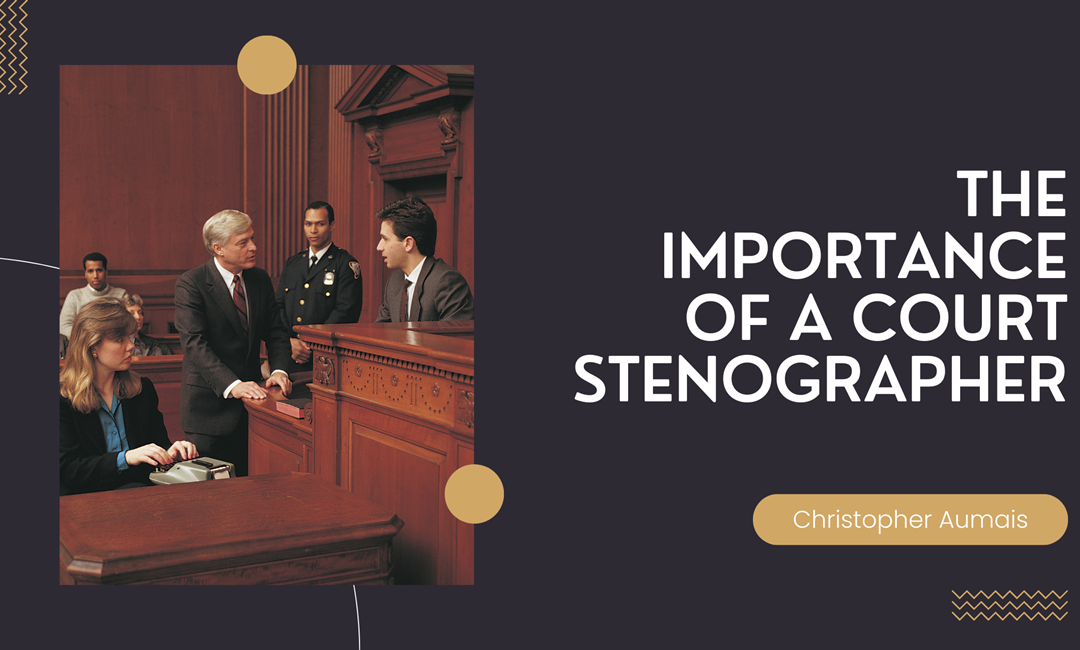
Court stenographers, or court reporters, are the unsung heroes of the courtroom. They are tasked with the critical responsibility of creating an accurate and comprehensive record of legal proceedings. While they might not be the most visible figures in a trial, their role is indispensable to the judicial process. The importance of a court stenographer lies in their ability to provide an exact transcription of every word spoken in court, ensuring that the legal system operates with transparency, fairness, and accountability.
One of the most important functions of a court stenographer is to create a verbatim record of court proceedings, which can include trials, depositions, hearings, and legal arguments. This record is not just a transcript of what was said; it becomes an official document that lawyers, judges, and appellate courts rely on to review cases. These transcripts are crucial when determining the outcome of legal appeals, verifying testimonies, or referencing past cases for future trials. A well-documented record helps avoid discrepancies, confusion, or misrepresentation of facts, all of which could negatively impact the delivery of justice.
Court stenographers must possess exceptional skills in stenography or voice writing, using specialized equipment to capture words as quickly and accurately as they are spoken. They work in real-time, meaning they must keep up with fast-paced legal exchanges, interruptions, or overlapping dialogues without missing a single detail. This requires high levels of concentration, speed, and precision. Even minor errors in transcription can lead to legal complications, making the job of a court stenographer highly technical and demanding.
The importance of a court stenographer also extends beyond the courtroom. In many cases, the transcripts they produce are used as evidence in later stages of legal proceedings or become part of public records that ensure legal accountability. For example, if a lawyer files an appeal, they must review the stenographer’s record to understand the basis of the original court’s decision. These transcripts also play a crucial role in high-profile cases, where media and public scrutiny demand transparency and accurate reporting. In such cases, court stenographers provide an essential service by delivering a reliable and unbiased account of the proceedings.
Moreover, court stenographers often play an important role in depositions—out-of-court testimonies used in the discovery phase of a lawsuit. In these settings, stenographers create transcripts that can later be introduced as evidence in court. This function ensures that both parties in a legal case have access to the same factual record and helps prevent misinterpretation or selective quoting of testimony. Stenographers thus ensure that depositions, like trials, are recorded with full accuracy.
In addition to their vital work in courtrooms and depositions, stenographers contribute to legal proceedings by providing real-time transcription for individuals with hearing impairments. This service allows everyone involved in the legal process, regardless of their abilities, to participate fully and fairly. In this way, stenographers help promote inclusivity and ensure equal access to justice.
In conclusion, the role of the court stenographer is essential for ensuring the integrity of legal proceedings. Their work provides the foundation for accurate legal records, facilitates transparency in the judicial process, and supports the rights of all individuals in the courtroom. Though often behind the scenes, court stenographers play a critical part in upholding justice.